Tongits Zingplay - Card Game
VNG ZingPlay StudioCard
3.950.00 Reviews
- Version
- 4.27
- Installs
- 10.00M
- Age Rating
- Teen
Screenshots

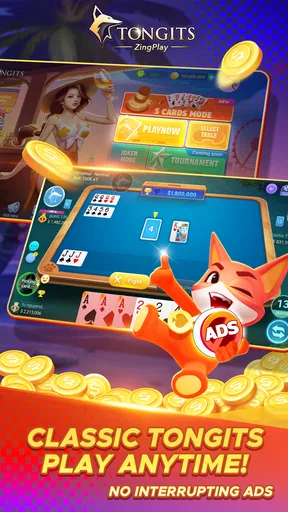


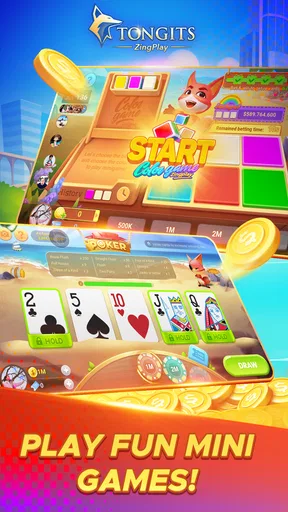
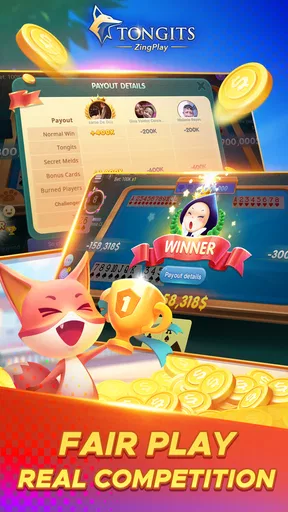
Our Review of Tongits Zingplay - Card Game
 Analysis by Appyee
What makes Tongits Zingplay worth a closer look is not simply that it puts a familiar Filipino card game on a phone. Its main appeal is the way it turns a traditionally social, turn-based game into something I can pick up whenever I have a few spare minutes. I can play from home, during a quiet break, or while waiting for an appointment, without preparing a table or finding a full group in advance.
That convenience is also the central trade-off. A mobile version gives me faster access to opponents and a smoother way to practise, but it cannot completely reproduce the atmosphere of sitting with friends and reading the pace of a real table. My experience with this game is best described as accessible and lively, with enough competitive tension to keep ordinary rounds interesting, although players who dislike online matchmaking or optional spending should approach it with realistic expectations.
Why the online table is the game’s defining strength
Developed by VNG ZingPlay Studio, this free card game is built around online Tongits play rather than a solo card pastime. That distinction matters. The game’s strongest capability is its ability to make a traditional round available on demand, giving me a practical alternative to waiting until friends or relatives are in the same place.
I see that as more than a convenience feature. Tongits depends on timing, memory, and decisions about when to draw, meld, or hold cards. Playing against live competition makes those choices feel meaningful. A careless move can change the direction of a round, while a patient hand can put pressure on opponents without requiring flashy presentation. The online format therefore supports the part of Tongits that I find most satisfying: trying to understand what other players may be collecting and deciding how much risk is acceptable.
The game’s position as a well-known online Tongits option in the Philippines also helps explain its appeal. It is aimed at people who already recognise the rules as well as players who want a digital entry point. I would not call it a universal card app for every taste; its identity is strongly tied to Tongits and to the habits of players who enjoy this particular style of competitive play.
Its audience is substantial, with more than ten million installs and an average score of 3.9 from around one hundred thousand ratings. Those figures suggest that the game has reached a broad mobile audience, but they also tell me not to treat popularity as proof that every player will enjoy it. A large player base can make an online game feel active, yet personal tolerance for competitive pressure, interruptions, and in-app purchases still matters more than download volume.
The first few rounds: learning the rhythm instead of memorising everything
When I approach a Tongits app for the first time, my main concern is not the card graphics. It is whether the game lets me understand the rhythm of a round without making every mistake feel expensive. In practice, the useful way to learn here is to watch the discard flow, notice which combinations opponents appear to be building, and resist the urge to treat every playable card as an immediate opportunity.
That last point is easy to underestimate. New players often focus only on forming their own sets, but online Tongits rewards attention to the table. If an opponent repeatedly avoids a certain discard or picks up a particular type of card, that behaviour can influence what I choose to release. I find the app most rewarding when I use each turn as information, not just as a chance to improve my own hand.
For someone returning to the game after a long break, the mobile format is useful because the cards are always available for a quick refresher. I would still recommend starting cautiously rather than immediately treating the first sessions as serious competition. The interface may make the actions feel simple, but the strategic part comes from recognising patterns over several rounds.
The Teen content rating is another practical point for households. It signals that this is not being presented as a children’s card toy, so parents should consider whether the competitive online setting and purchase options fit the player using the device. The game is free to install, but optional items range from $0.29 to $99.99 each. I would set a personal spending limit before playing, especially if the app becomes part of a daily routine.
What a normal session feels like
A realistic use case is a short evening break after work. I might have enough time for a few rounds but not enough energy to organise a board game. Opening an online Tongits table removes that preparation. I can concentrate on the current hand, make decisions, and stop when I am ready rather than committing to a long social session.
That flexibility works particularly well for players who enjoy repeated practice. One round may expose a weakness in my discard choices, and the next gives me a chance to adjust. I can deliberately work on one habit, such as holding useful cards a little longer or avoiding predictable discards, instead of playing only for a final result. This is one of the less obvious benefits of the app: its value is not limited to winning. It can serve as a compact training space for decision-making.
There is also a useful difference between playing when I am alert and playing while distracted. Tongits may look casual, but a rushed session can lead to automatic choices. If I am checking messages, watching television, or trying to finish a round while doing something else, I am likely to miss clues in the discard pile. My practical advice is to use it as a focused short break, not as background entertainment.
The current version is 4.27, and the game supports devices running Android 8.0 or later. For many users that makes installation straightforward, but device compatibility is only the first question. The more important question is whether the phone is comfortable for reading cards and following turns. On a smaller screen, I would pay extra attention to the clarity of the table and avoid playing in a hurry, since a minor visual mistake can affect the whole hand.
Three habits that make the online format more rewarding
My first practical tip is to separate “a card that helps me” from “a card that helps the opponent.” Before discarding, I look at the visible direction of the round rather than judging a card in isolation. A card that seems harmless may complete a useful combination for someone else. This habit makes the game feel more like observation and less like random card disposal.
Second, I treat early rounds as information-gathering sessions. Instead of chasing an ambitious hand every time, I watch how quickly opponents commit to combinations and how much risk they appear willing to take. This gives me a better sense of when to be conservative. It is a small adjustment, but it prevents the common mistake of forcing a plan that the cards do not support.
Third, I decide in advance how long I want to play. Online card games can encourage “one more round,” particularly after a loss. A time limit protects the part of the experience I actually value: making thoughtful decisions. It also reduces the temptation to spend simply because I am trying to recover from an unlucky or disappointing session.
These habits are not hidden buttons or special systems. They are ways of using the online format intelligently. The app provides quick access to the table, but the quality of the experience depends on how deliberately I approach each round.
Where it fits among other card-game choices
Compared with a physical Tongits game, the app wins on availability. I do not need cards, a table, or several people in the same room. It is also easier to fit into an irregular schedule. The physical alternative remains better for conversation, shared humour, and the small social details that make a familiar family game memorable. If my goal is connection with people beside me, a phone screen is not a complete replacement.
Compared with a generic solitaire app, this game offers more uncertainty because other players influence the round. Solitaire is often better when I want something quiet and fully self-paced. Tongits Zingplay is the stronger choice when I want decisions to be tested by opponents and when the social identity of the game matters to me.
It also differs from broad card collections that bundle many unrelated games. Those apps may be more suitable for someone who wants variety, but they can feel less focused. Here, the narrow focus is an advantage for a Tongits fan: I can spend my time improving at one game rather than learning a new ruleset every time I open the app.
There is a downside to that focus. If I am only mildly interested in Tongits, I may run out of reasons to return sooner than I would with a larger card catalogue. The app makes sense when the specific game is the attraction, not merely the fact that it contains cards.
The cost of convenience
Free access lowers the barrier to trying the game, but the purchase range deserves attention. Optional items can cost from $0.29 to $99.99 per item, which is a wide gap. I would not install it for a child without discussing purchases and using the device’s existing spending controls. Even for adults, deciding what I am willing to spend before a competitive session is more sensible than making that decision after a frustrating loss.
This does not make the game unsuitable, but it changes how I evaluate it. The free entry is valuable for testing whether the online format suits me. I can learn the feel of the tables before deciding whether any optional purchase is worthwhile. In my view, that is the right order: first establish that I enjoy the core card play, then consider extras only if they genuinely improve my routine.
The online nature can also create emotional friction. A poor hand or a well-played opponent may feel more personal than losing to a predictable computer routine. Players who prefer complete control over pace may find live rounds less relaxing. I would skip this game if I want a purely offline experience, dislike competitive uncertainty, or tend to chase losses.
Another limitation is that a mobile match is not automatically a substitute for teaching the game face to face. A friend who has never played may understand the basics more comfortably with someone explaining the choices beside them. The app is better as a way to continue playing and practising once the rules are familiar, although a patient beginner may still enjoy learning through repeated rounds.
Who will get the most from it
The best fit is a player who already knows Tongits, enjoys short competitive sessions, and wants access to online opponents without arranging a physical gathering. It is also a good match for someone returning to the game after time away and looking for regular practice. The focused design means I can work on reading discards, managing risk, and recognising when a hand is worth pursuing.
Players who enjoy Filipino card culture may appreciate the app’s specific identity more than someone seeking a generic international card experience. That cultural focus gives the game personality. It feels designed around a real game with an established audience, not around the idea of filling a phone with interchangeable card mechanics.
I would be more cautious about recommending it to someone who wants no purchase prompts, no online competition, or a completely calm game for children. The Teen rating and the broad range of optional item prices make it important to consider the player’s age and spending habits. I would also point a variety-seeking card fan toward a larger multi-game collection instead.
My final take after weighing the whole experience
Tongits Zingplay succeeds because it concentrates on one clear purpose: making online Tongits easy to reach. That capability changes the game from an occasional social activity into something I can use for practice, quick competition, or a familiar break in the day. The strongest sessions are the ones where I pay attention to the table and use the short format to improve a specific decision-making habit.
It is not flawless for every kind of player. The online setting can feel more intense than a casual physical game, and the optional purchase range means I would play with a budget in mind. People who want solitaire, offline calm, or a broad selection of card games have better alternatives.
For me, the recommendation is straightforward: install it if the appeal is specifically Tongits and you want a convenient online table. Start with free play, take time to observe opponents, and treat each round as practice rather than a reason to chase a result. With that mindset, this card game offers a useful balance of accessibility and strategy, while still leaving room for the real-world version when what I want most is conversation around the table.
Verdict
Strengths of Tongits Zingplay - Card Game
- Fast matchmaking keeps games short and convenient.
- Simple rules make it approachable for new card-game players.
- Chat and emotes add a social element during matches.
- Daily rewards encourage regular play without requiring payment.
- Runs smoothly on most modern Android and iOS devices.
Limitations of Tongits Zingplay - Card Game
- Random matchmaking can create uneven games.
- In-app purchases may give frequent players extra advantages.
- Ads can interrupt the experience for free users.
- A stable internet connection is required for online matches.
- Some features and rewards may feel repetitive over time.
Other Releases by VNG ZingPlay Studio
View All


Similar Picks in This Category
View All
Solitaire - Classic Card Games
MobilityWare4.6

UNO!™
Mattel163 Limited4.3

Spider Solitaire: Card Games
MobilityWare4.6

Solitaire.com - Classic Cards
Tripledot Studios Limited4.7

Plants vs. Zombies™ Heroes
ELECTRONIC ARTS4.1

Hearthstone
Blizzard Entertainment, Inc.4.1
Frequently Asked Questions
What is Tongits ZingPlay, and how is the game played?
Tongits ZingPlay is a mobile card game based on Tongits, a popular Filipino-style rummy game. You play against other participants, usually trying to form sets and runs while reducing the value of the cards left in your hand. The app includes matchmaking, virtual chips, rankings, and game rooms, making it suitable for both casual sessions and more competitive play.
Can I play Tongits ZingPlay offline or without creating an account?
Tongits ZingPlay is primarily designed as an online multiplayer experience, so an internet connection is generally required to join tables, synchronize your progress, and compete with other players. Depending on the current version, you may be able to explore some features as a guest, but creating or linking an account is usually recommended if you want to protect your progress and access your profile across supported devices.
Is Tongits ZingPlay free to download and play?
The game is normally free to download, allowing players to install it without paying an upfront purchase price. However, it may include optional in-app purchases for virtual currency, special items, or other game-related benefits. These purchases are not necessarily required to play, but users should review the store listing and configure parental or payment controls if several people share the device.
Does Tongits ZingPlay use real money or offer cash prizes?
Tongits ZingPlay is generally built around virtual chips and in-game competition rather than direct real-money gambling. Virtual currency should not automatically be treated as cash, and availability of features can vary by country, age requirements, and local regulations. Before downloading or making a purchase, check the official app-store description, terms of service, and payment rules that apply to your location.
What should I know about privacy, permissions, and fair play?
As an online card game, Tongits ZingPlay may collect account, device, gameplay, and diagnostic information to operate multiplayer services, prevent abuse, and improve performance. Review the privacy policy before signing in and only grant permissions that appear necessary. Stable internet access is also important, while fair play matters because exploiting bugs, using unauthorized tools, or manipulating matches can lead to penalties or account restrictions.
Play our best games!


